
•5 min read•Verified by Colorado Licensed Plumbers
Water Heater Relief Valve Dripping: Causes, Risks & Solutions
A dripping temperature and pressure (T&P) relief valve is an urgent warning signal from your water heater. Whether the valve is weeping due to closed-loop thermal expansion, municipal pressure surges, or an internal mechanical failure, ignoring it risks water damage or dangerous pressure buildup. Here is what every Littleton homeowner needs to know.
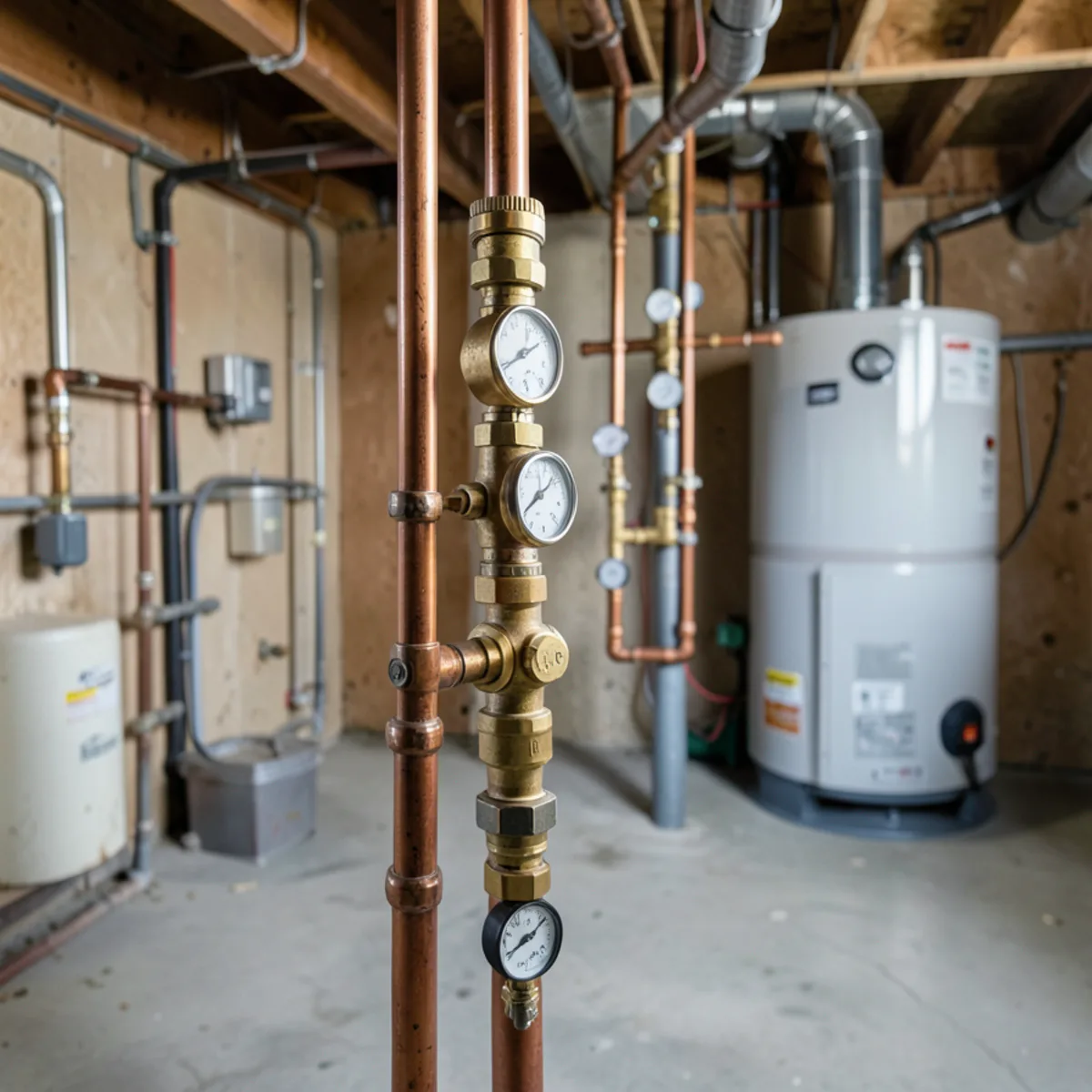
Experiencing an active water heater emergency in Littleton? Shut off your cold water supply and call our dispatch desk.
(201) 277-9344The Anatomy and Safety Function of the T&P Relief Valve
The temperature and pressure (T&P) relief valve is the most critical safety mechanism on any pressurized water heater. Installed either on top of the tank or high on the side casing, this brass valve contains a spring-loaded diaphragm and an extended copper probe filled with temperature-sensitive wax.
The valve is engineered to operate under two distinct failure conditions:
1. Pressure Relief: If internal hydrostatic pressure inside the tank rises to 150 pounds per square inch (PSI), the calibrated spring compresses, allowing water to discharge and prevent tank rupture.
2. Temperature Relief: If internal water temperature reaches 210°F (just below boiling), the wax sensor expands dramatically, forcing the valve open to discharge superheated water before steam can form.
Without a functioning T&P valve, an uncontrolled water heater can become an explosive hazard known as a BLEVE (Boiling Liquid Expanding Vapor Explosion). When water is heated under pressure past 212°F, it remains liquid; if the tank suddenly fractures, that superheated liquid instantaneously flashes into thousands of cubic feet of expanding steam, launching the appliance like a rocket through floor joists. Because of this extreme risk, a dripping T&P valve must never be capped, plugged, or ignored.
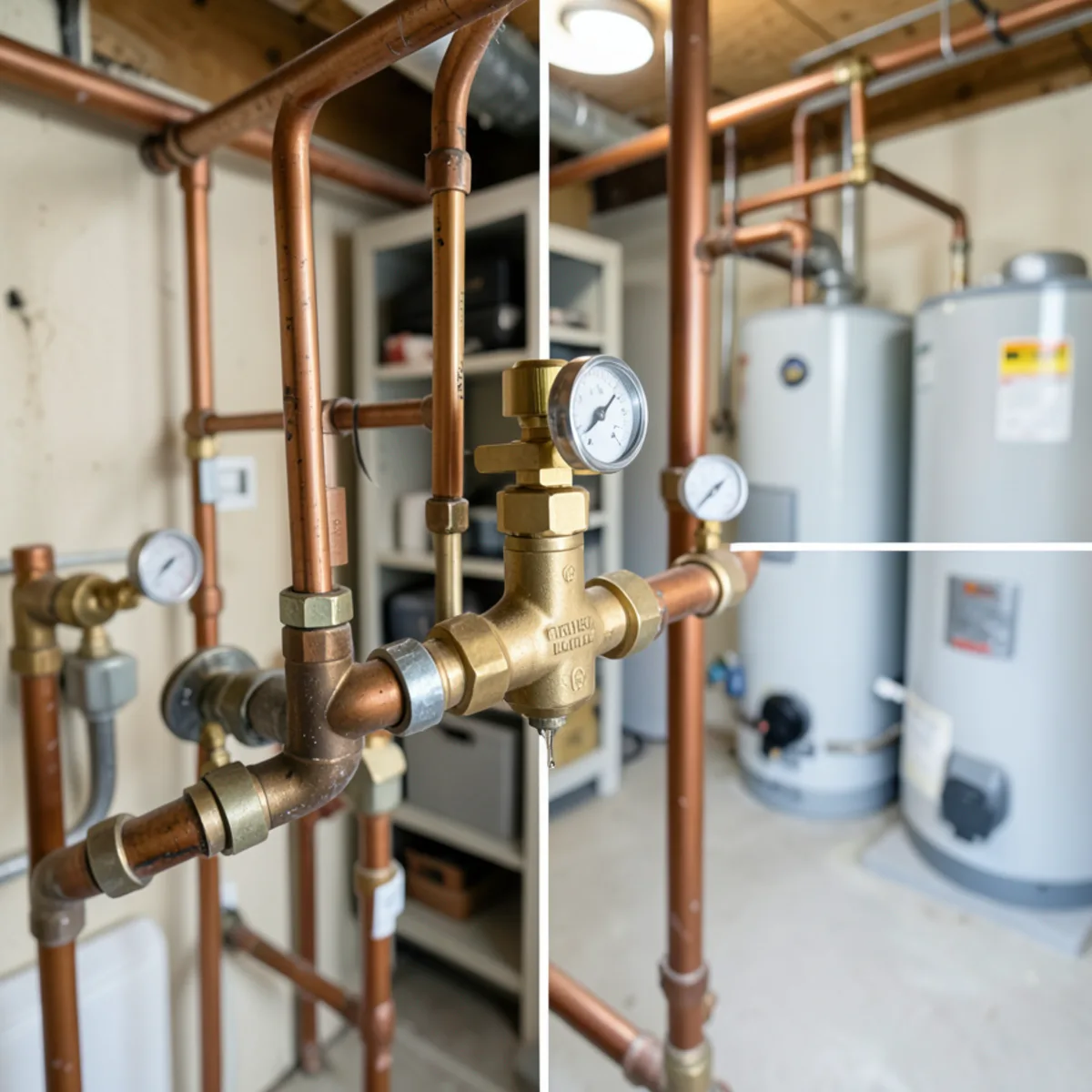
Cause 1: Thermal Expansion in Closed Plumbing Loops
The most common reason for intermittent relief valve dripping in Littleton and surrounding Arapahoe County communities is thermal expansion in a closed plumbing system.
Basic physics explains the mechanism: when cold water (often entering Front Range homes at 40°F during winter) is heated to 125°F inside a sealed 50-gallon tank, the water expands by approximately two percent. Water is an incompressible liquid; it cannot shrink to accommodate increased volume. In historic open plumbing networks, this extra volume simply pushed backward into the city water main.
However, modern plumbing codes and water providers (including Denver Water and local water and sanitation districts) require check valves, dual-check backflow preventers, and pressure-reducing valves (PRVs) at the water meter to protect the public distribution system from contamination. These devices turn your home plumbing into a sealed closed loop.
When the burner fires and water expands inside this closed loop, pressure spikes rapidly. Without an expansion device, pressure frequently escalates from 60 PSI to 150 PSI within twenty minutes, forcing the T&P valve to weep small puddles of water onto the floor. Installing or recharging a thermal expansion tank resolves this issue permanently.
Need a Licensed Water Heater Specialist in Littleton?
Fast diagnostic triage, upfront quotes, and zero pressure. Call our local shop directly.
Cause 2: High Municipal Water Pressure and Failed Pressure Regulators
A second frequent culprit behind a weeping relief valve is excessive static water pressure from the street. The International Plumbing Code stipulates that residential water pressure should not exceed 80 PSI. Pressures higher than this accelerate fixture wear, rupture appliance supply lines, and push safety relief valves to their functional limits.
In mountainous and hilly sections of the southwest Denver metro area—such as Ken Caryl, Roxborough Park, and Castle Rock—water utilities pump water through trunk mains at pressures often exceeding 100 to 140 PSI to reach higher elevation storage tanks. Homes in these zones rely on a Pressure Reducing Valve (PRV), typically installed near the main water shutoff where service enters the basement.
PRVs contain internal rubber diaphragms and metal springs that degrade after seven to ten years. When a PRV fails, street pressure surges directly into household piping. If your incoming static pressure climbs to 90 or 100 PSI, the normal thermal expansion bump easily blows past the 150 PSI threshold of the T&P valve. Testing pressure with a liquid-filled test gauge attached to a hose bibb quickly confirms whether a failed PRV is causing your leak.
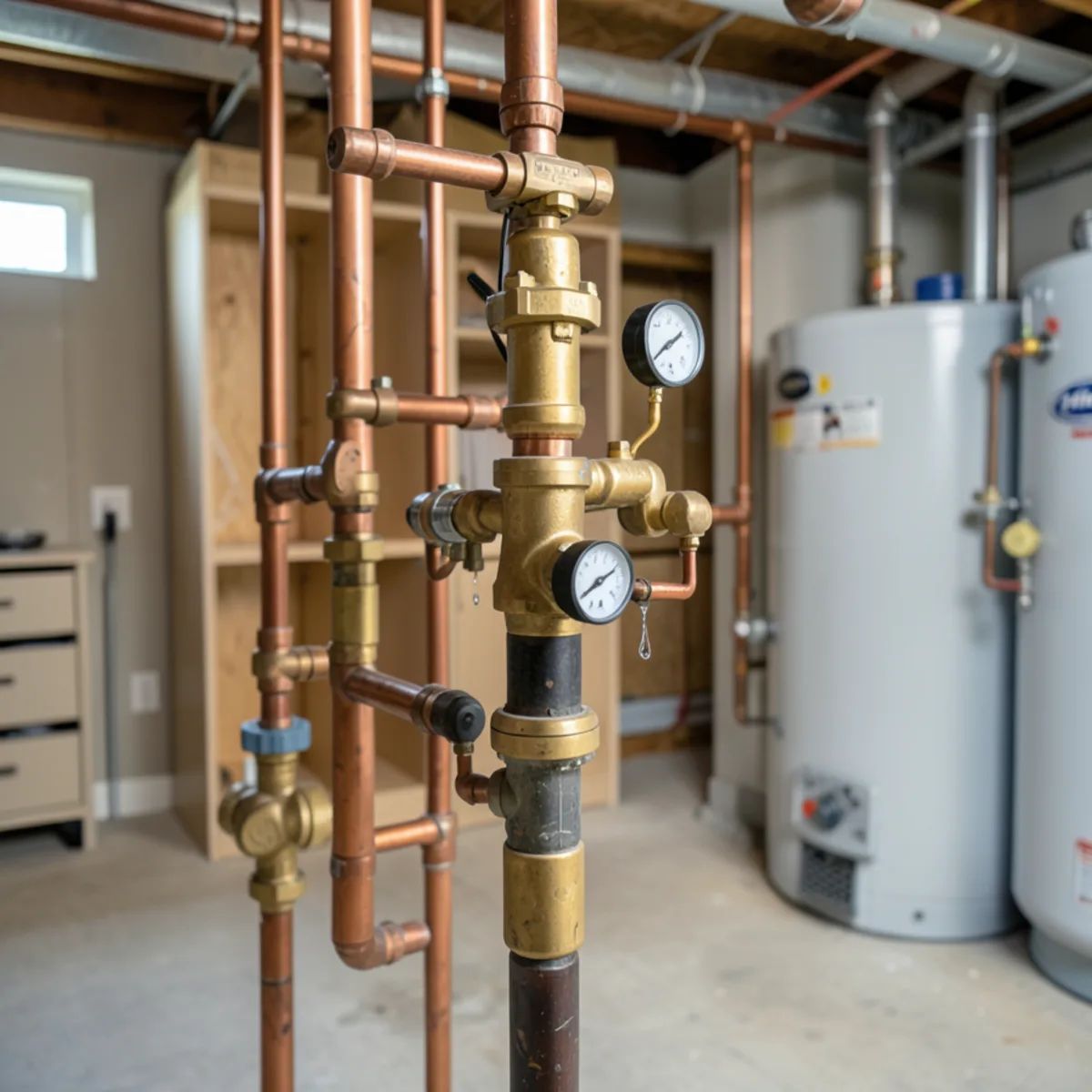
Cause 3: Thermal Runaway and Thermostat Failure
If the relief valve is discharging continuous streams of boiling water or emitting audible steam hisses, your water heater is experiencing dangerous thermal runaway. This is an active emergency requiring immediate shutdown.
In gas water heaters, thermal runaway occurs when the main gas control valve thermostat mechanical linkage fails, sticking the gas valve open so the burner fires indefinitely. In electric units, thermal runaway often happens when an electrical heating element fractures and grounds out against the steel tank wall. When grounded, current bypasses the thermostat control and energizes the element continuously, heating water until the high-limit ECO switch trips or the T&P valve blows open.
If you observe boiling water or steam exiting the T&P discharge pipe, immediately turn off the fuel or electrical power supply and shut off the cold water inlet valve from a safe distance. Do not place your hands or face near the discharge pipe termination.
Cause 4: Mineral Scale Accumulation and Damaged Valve Seats
Sometimes a T&P valve drips simply because the valve itself has worn out. In Littleton homes, tap water carries 7 to 9 grains per gallon of dissolved limestone and silica minerals. Over years of service, calcified mineral crusts deposit along the brass seat and rubber seal disc inside the valve.
This often becomes obvious after a homeowner tests the valve. Plumbing codes recommend lifting the manual test lever on the T&P valve once a year to ensure free movement. However, on older water heaters where the valve has sat untouched for years, lifting the lever dislodges hardened mineral flakes. When the valve snaps shut, sharp calcium crystals become trapped between the rubber seal and brass seat, preventing complete closure.
Once mineral crystals score the rubber disc, the valve will drip continuously even under normal water pressure and temperature. In this situation, the valve cannot be cleaned or rebuilt; it must be unthreaded from the tank and replaced with a brand-new Watts or Cash Acme ASME-rated valve.
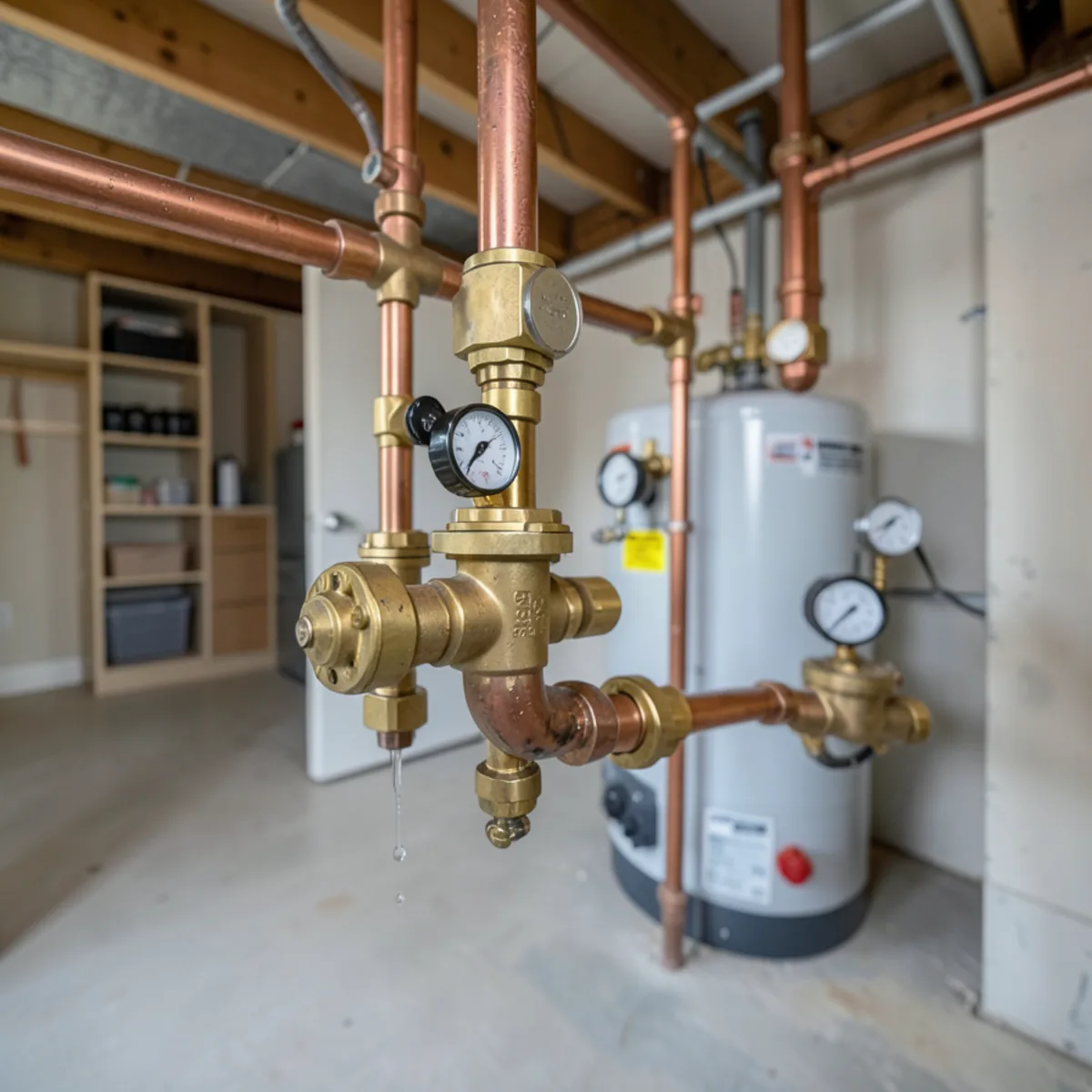
Code-Compliant Discharge Piping: IPC Section 504.6 Rules
When a T&P relief valve activates, it can discharge superheated water at high velocity. To prevent severe burns, the International Plumbing Code (IPC Section 504.6) strictly governs how relief discharge lines must be constructed:
1. Material Specifications: Discharge lines must be constructed of rigid copper, CPVC, or galvanized steel rated for hot water distribution. Standard PVC or flexible plastic garden hoses are strictly prohibited because boiling water softens and bursts them under pressure.
2. Termination Elevation: The discharge pipe must run downward by gravity and terminate between 1.5 inches and 6 inches above the floor, waste receptor, or outside grade. It must never terminate high where discharging boiling water can spray people.
3. Unobstructed Flow: The pipe cannot contain any valves, tee fittings, threaded connections at the terminal end, or internal diameter reductions. The pipe diameter must match the 3/4-inch outlet size of the valve.
At Littleton Water Heaters, our technicians inspect your complete safety system—including relief valves, expansion tanks, and code-compliant discharge lines. Call (201) 277-9344 to schedule a thorough safety diagnostic.
Related Water Heater Services:
Water heater repair in Littleton, COWater heater expansion tank installation in Littleton, COWater heater inspection in Littleton, CO
Service Availability:
Frequently Asked Questions
Yes, it must be treated seriously. While a slow drip often stems from closed-loop thermal expansion or minor mineral scaling, it can also indicate excessive pressure exceeding 150 PSI or scalding water temperatures approaching 210°F. Never leave a weeping relief valve unaddressed.